Why Is Python Called Python? The Real Story (Not a Snake!)
If you walk into a room of non-developers and tell them you spent all morning “wrestling with Python,” they’ll probably call animal control. To the rest of the world, a Python is a giant, scaly predator that could swallow a small goat. But to us, it’s the elegant, indentation-loving language that pays our rent.
So, why is Python called Python? Did the creator have a pet snake? Was it developed in a jungle? The answer is actually much funnier—and much more British—than you might think. It turns out that the foundation of our entire careers is built on a foundation of 1970s surrealist comedy.
The Man, The Myth, The Legend: Guido van Rossum
To understand the name, we have to go back to the late 1980s. A Dutch programmer named Guido van Rossum was working at the Centrum Wiskunde & Informatica (CWI) in the Netherlands. He was helping develop a language called ABC, but he felt it had limitations.
During the Christmas week of 1989, Guido’s office was closed, and he was looking for a hobby programming project to keep him occupied. Most people bake cookies or watch movies during the holidays; Guido decided to implement a new scripting language. This is a classic example of relatable Python developer problems, we can’t even take a vacation without accidentally starting a global tech revolution.
The Comedy Connection: Monty Python’s Flying Circus
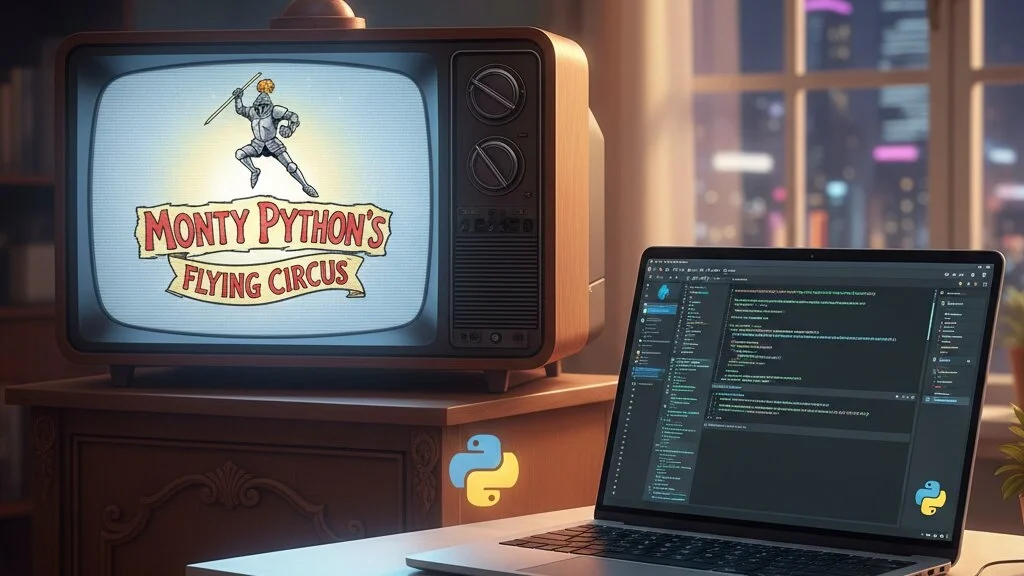
While Guido was implementing this new language, he was also reading the published scripts from “Monty Python’s Flying Circus,” a legendary BBC comedy series from the 1970s.
Guido was a big fan of the troupe’s irreverent, surreal, and often absurd humor. When it came time to pick a name for his project, he didn’t want something dry and academic like “C” or “Pascal.” He wanted something:
- Short
- Unique
- Slightly mysterious
- Fun
He settled on Python. It had nothing to do with reptiles and everything to do with John Cleese and Eric Idle.
Why the Name Mattered for the Community
The name set the tone for the entire Pythonista life. Because the language was named after a comedy show, the early documentation was filled with jokes and references to Monty Python sketches.
Instead of using boring variable names like foo and bar, early Python tutorials often used spam and eggs (a nod to the famous “Spam” sketch). This sense of playfulness is exactly what makes the Pythonista mottos so unique, we take our code seriously, but we don’t take ourselves too seriously.
The Snake Logo: A Creative Misunderstanding?
If the language is named after a comedy troupe, why is the logo two interlocking snakes?
As Python grew in popularity, the “snake” association became impossible to ignore. While the name’s origin is comedic, the visual identity shifted toward the reptile for simplicity and branding. Today, the blue and yellow snakes are iconic, but they are technically a “back-formation” of the name. If Guido had been a fan of The Office, we might all be using a language called “Dunder Mifflin” with a paper-clip logo today.
How the “Fun” Origin Influences Modern Coding
The fact that Python started as a hobby project named after a comedy show is reflected in the language’s design. The “Zen of Python” (which you can see by typing import this) emphasizes that “Simple is better than complex.”
This philosophy is why Python is the go-to language for everything from AI to funny Python developer memes. It was built to be enjoyable to use. When you wear one of our best Python developer t-shirts, you aren’t just wearing a tech brand—you’re wearing a legacy of creativity and wit.
Interesting Python History Tidbits
- First Release: Python 0.9.0 was released in 1991.
- The “Benevolent Dictator”: For decades, Guido was known as the “Benevolent Dictator for Life” (BDFL), a title that sounds like it came straight out of a Monty Python skit.
- Spam, Spam, Spam: To this day, “Spam” and “Eggs” are the official Pythonic equivalents of “Foo” and “Bar.”
Conclusion: A Name as Unique as the Code
So, the next time someone asks you why is Python called Python, you can tell them the truth: it’s a tribute to a group of British comedians who dared to be different. It’s a reminder that great things often start as small, fun projects.
Whether you’re a professional dev or just a fan of the history, the story of Python is a testament to the power of a good sense of humor. Ready to celebrate the “Flying Circus” of code? Check out our Python shirts collection and find a design that honors the legend!
Frequently Asked Questions
Is Python related to the snake at all?
Originally, no. The name is 100% inspired by the comedy group Monty Python. However, the community has embraced snake imagery for logos and branding over the years.
Who is Guido van Rossum?
He is the creator of Python. He worked at Google and Dropbox and is currently a Distinguished Engineer at Microsoft. He’s the reason we have the best Python programming sayings today.
What does “Spam and Eggs” mean in Python?
They are placeholder names used in examples and documentation, serving as a tribute to a famous Monty Python sketch where a menu consists almost entirely of spam.
Why did Guido want a “mysterious” name?
In the early days of computing, names were often acronyms. Guido wanted something that stood out and captured the imagination of hackers and hobbyists.
How can I learn more about Python’s history?
We recommend checking out our 25 Python fun facts for more trivia about how this language took over the world!