Why Coding at Night Feels Easier
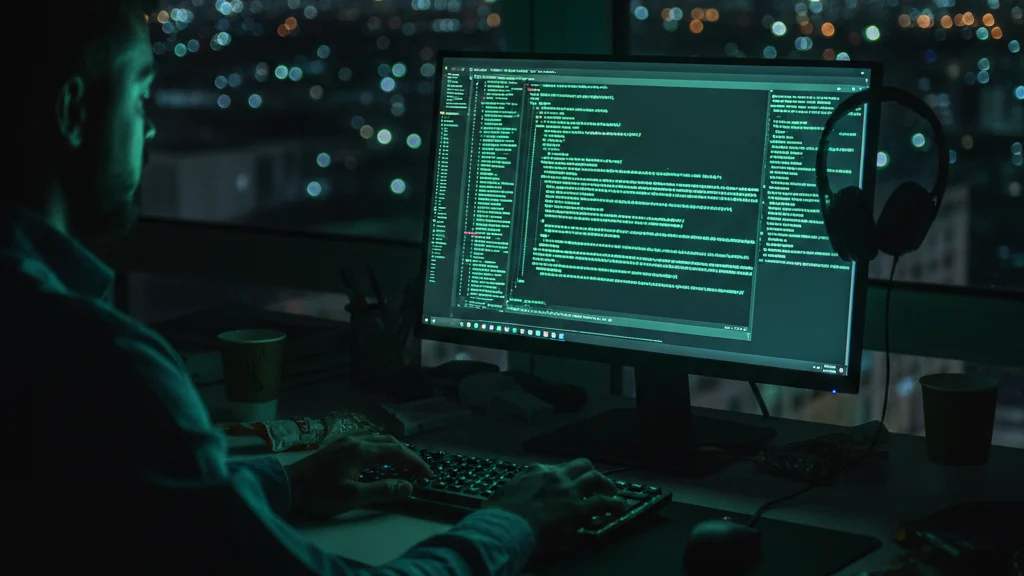
The clock hits 11:00 PM. The world goes quiet. The Slack notifications stop chirping, the coffee has finally settled into a steady hum in your veins, and suddenly, boom. You’ve just written more bug-free code in two hours than you did in the previous eight.
In the Psychology of Coding, the Night Owl Coder isn’t just a tired cliché; it’s a biological reality for thousands of developers. But it’s not just about the peace and quiet. There is a fascinating intersection of neurobiology and cognitive load that makes the midnight oil feel like high-octane fuel.
1. The Tired Brain Creativity Boost
It sounds counterintuitive, but a slightly fatigued brain can actually be better at creative problem-solving. During the day, your prefrontal cortex is on high alert, filtering out distractions and keeping your thoughts “tight.”
As you get tired, this internal filter relaxes. This disinhibition allows for more tangential, creative connections. In the context of the emotional toll of debugging, a tired brain is less likely to over-analyze every tiny detail and more likely to find that outside-the-box solution that eluded you at 2:00 PM.
2. The Interaction of Attention Residue.
Every time you check an email, answer a question, or look at a funny meme, a piece of your attention stays stuck on that previous task. This is called Attention Residue.
By 11:00 PM, the social world has effectively shut down. There are no new emails or meetings looming. This clears the residue, allowing you to achieve a deeper Flow State. This timing bypasses the anxiety of having an audience while you work; daytime is full of potential interrupters who fracture your mental RAM.
3. The Bright Screen / Melatonin Loop
There’s a physiological hack at play here, too. Developers sit in front of large, bright monitors. This blue light suppresses melatonin (the sleep hormone), effectively tricking your brain into a state of artificial noon.
While this isn’t great for your long-term sleep hygiene, it creates a high-focus window where your brain feels alert while the rest of the world is in a low-energy state. This mismatch creates a psychological sense of bonus time, a period where you feel you are getting ahead while everyone else is stationary.
4. Reduced Cognitive Load
As we explored in our Post on Developer Psychology, the biggest enemy of a programmer is Cognitive Load.
During the day, you aren’t just coding; you’re managing your professional persona, worrying about deadlines, and navigating office politics. At night, that social cognitive load drops to zero. You aren’t a Senior Developer or a Junior Dev at 1:00 AM; you’re just a person talking to a machine. This reduction in social pressure is why the written word is more efficient for coders; it’s just more efficient.
How to Manage Your Midnight Superpowers
While the night is a great place to visit, you don’t want to live there forever.
Save the Hard Stuff for the Silence: Use your daytime for meetings and low-logic tasks. Save the deep architectural puzzles for your high-focus night window.
The Blue Light Buffer: Use Night Shift modes or amber glasses 30 minutes before you actually want to sleep, or your brain will stay in code mode long after you hit the pillow.
Beware the Over-Engineering Trap: Because your brain is more creative at night, you are at high risk for over-complicating straightforward coding tasks and building complex solutions you don’t actually need.
The TechGeeks Directive
Whether you’re a morning lark or a night owl, the key is protecting your focus. The night isn’t just a time; it’s a state of mind where the noise stops and the logic starts.
Do you find yourself starting “just one more” project at midnight?
Do you find it hard to stop? Discover the dopamine loop of the “blank slate” project.
If your late-night sessions are fueled by a feeling that you’re falling behind, check out our guide on coping with developer impostor syndrome.
Frequently Asked Questions
Is there a scientific reason why programmers code better at night?
Yes. Coding at night feels easier due to a biological phenomenon called disinhibition. As the brain becomes slightly fatigued, the prefrontal cortex relaxes its filter, allowing for more creative, tangential connections. This state of tired creativity often helps developers solve complex architectural puzzles that were blocked by daytime over-analysis.
What is Attention Residue, and how does it affect daytime coding?
Attention Residue occurs when a piece of your focus remains stuck on a previous task, such as an email or meeting. During the day, constant interruptions fracture your Working Memory. At night, when social and professional notifications stop, this residue clears, allowing for a deeper, uninterrupted Flow State.
How does blue light impact a developer’s focus after dark?
Bright monitors emit blue light that suppresses melatonin production, tricking the brain into a state of artificial noon. While this can disrupt sleep hygiene, it creates a high-alert physiological window that makes developers feel more focused and productive compared to the low-energy state of the surrounding environment.
Why is cognitive load lower for developers during late-night hours?
At night, the social cognitive load drops to zero. Developers no longer have to manage their professional persona or navigate office politics. This reduction in social pressure allows the brain to dedicate 100% of its resources to logic and execution, which is why many developers prefer text over talking to maintain that same efficiency during the day.
Does coding at night increase the risk of over-engineering?
Yes. Because a tired brain is more creative and less inhibited, developers are at a higher risk of overthinking simple tasks. The lack of logical filters can lead to building complex, unnecessary architectures or gold-plating code instead of following the YAGNI (You Ain’t Gonna Need It) principle.
How can I transition from code mode to sleep after a night session?
To clear your mental cache, use Night Shift modes or amber-tinted glasses to reduce blue light exposure at least 30 minutes before bed. This helps signal to your brain that the high-focus window is closing, preventing the dopamine loop of side projects from keeping you awake until dawn.