Have you ever spent six hours staring at a single semicolon, alternating between feeling like a literal god and wondering if you’re actually qualified to operate a toaster?
Welcome to
The Psychology of Programming
Coding isn’t just a technical skill; it’s a high-stakes mental marathon. Unlike most jobs, where doing the work results in steady progress, programming is a series of failures interrupted by a few brief moments of working code. This unique workflow does strange things to the human brain.
In this guide, we’re going deep into the cognitive mechanics of being a dev. We’ll explore why our brains get stuck in loops, why simple tasks feel like climbing Everest, and how to protect your mental real estate in a world of logic gates.
1. The Cognitive Load: Why Your Brain Feels Fried.
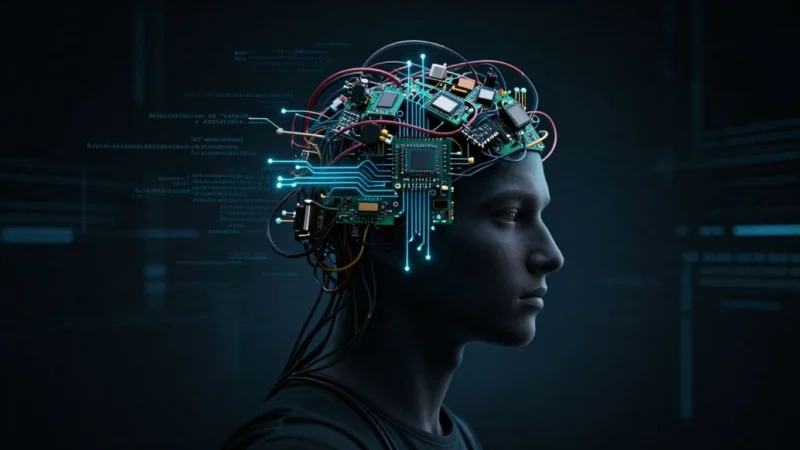
Programming requires a massive amount of Working Memory. Think of your brain like RAM; to solve a bug, you have to hold the variable states, the function logic, and the edge cases all in your head at once.
When someone interrupts you, that “RAM” is cleared. This is why programmers hate being watched while coding or being tapped on the shoulder; it’s not just annoying; it’s a physical reset of a complex mental structure you spent twenty minutes building.
2. The Dopamine Rollercoaster
Coding provides a very specific type of neurological feedback.
The Low: Spending days on a bug that turns out to be a typo. This leads to the “why am I even doing this?” phase.
The High: The moment the console log finally returns the right value.
This cycle is actually addictive. It’s the same “intermittent reinforcement” found in slot machines. It’s exactly why programmers get addicted to side projects, we are constantly chasing that next “Aha!” moment to validate our skills.
3. The Logical vs. Emotional Divide
We like to think we are purely logical beings, but coding is an emotional contact sport. There is a deep, psychological reason why debugging feels more emotional than logical. When the code fails, it feels like a personal rejection of our intellect.
The Developer’s Emotional Toolkit
| State | Psychological Impact |
| Flow State | Peak productivity, loss of time, and high satisfaction. |
| The Wall | Cognitive exhaustion, leading to tunnel vision debugging. |
| Impostor Syndrome | The persistent fear of being found out as a fraud. |
When logic fails, and the frustration kicks in, sometimes you just need to talk it out. Grab one of our signature Rubber Duck debugging tees, the perfect uniform for those ’emotional’ sessions with your code.
4. Why the Simple Stuff is Never Simple
To a non-coder, adding a button sounds easy. To a dev, that button represents a potential CSS nightmare, an API endpoint, and a state management headache. Why developers overthink simple tasks isn’t about being difficult; it’s about seeing the “ghosts” of future bugs that haven’t happened yet.
5. Protecting Your Mental Hardware
If you want to survive a 40-year career in tech, you have to treat your brain like the expensive hardware it is.
Respect the Night Owl Instinct: There’s a reason why coding at night feels easier scientifically; the lack of social noise reduces the threat of interruption, allowing for deeper focus.
Embrace the Silence: It’s okay to prefer Slack over a Zoom call. Understanding why developers prefer text over talking helps in setting boundaries that preserve your mental energy.
Accept the Doubt: Even the seniors feel it. If you’re wondering why programmers feel impostor syndrome after years of experience, know that it’s actually a sign you’re pushing your boundaries.
If you’re doing your best work at 2 AM, you might as well be comfortable. Our ultra-soft Midnight Coder hoodies are specifically designed for those late-night flow states when the world is quiet, and the code is flowing.
The TechGeeks Directive
Programming is 10% typing and 90% managing your own psychology. By understanding the “why” behind your stress and your quirks, you don’t just become a better coder, you become a happier human.
What’s your biggest mental hurdle today?
If you’re feeling like a fraud, check out our guide on overcoming the impostor syndrome cycle.
Struggling with a task that should be easy? See how to stop overthinking your code.
Frequently Asked Questions
Why do programmers feel like impostors even after years of experience?
Programmer impostor syndrome occurs because tech is constantly evolving. In a field where you are perpetually a beginner in a new framework or language, even senior developers experience self-doubt. It is often a sign of high competence and a drive for continuous learning rather than a lack of skill.
Why does debugging feel more emotional than logical?
Debugging is emotional because it involves intermittent reinforcement. The frustration of a long-standing bug creates a cognitive deficit, while the sudden fix triggers a massive dopamine hit. This rollercoaster makes the process feel personal, as if the code is rejecting the developer’s intellect.
Why is it so hard for programmers to handle interruptions?
Coding requires high working memory (cognitive load). Developers must hold complex mental models of variable states and logic in their “mental RAM.” An interruption clears this memory, forcing the brain to spend 10–20 minutes rebuilding the context, which leads to significant mental fatigue and frustration.
Is there a scientific reason why coding at night feels easier?
Yes. Coding at night feels easier due to reduced attentional competition. With fewer social interruptions and a quieter environment, the brain can enter a Flow State more deeply. Additionally, some developers experience a “tired brain” effect where they stop overthinking and simply focus on the execution of the code.
Why do developers prefer text communication over talking?
Most developers prefer text (like Slack or Email) because it is asynchronous. It allows them to respond without breaking their current flow state or clearing their working memory. Text also provides a searchable record of technical details, reducing the cognitive load required to remember verbal instructions.
How can I stop overthinking simple coding tasks
To stop overthinking, focus on MVP (Minimum Viable Product) coding. Developers often overthink because they see ghosts of future bugs or scalability issues. Breaking the task into the smallest possible functional unit and avoiding premature optimization helps in managing this psychological hurdle.