Best Geek Apparel Brands & Websites Reviewed
Let me paint you a picture.
You find a geeky t-shirt online that looks perfect. The joke is technically accurate, the design looks clean in the thumbnail, the price seems reasonable. You order it. It arrives two weeks later, and the print is slightly off-center, the cotton feels like sandpaper, and after one wash the design starts cracking at the edges like a dried riverbed.
You’ve been geek-apparel scammed. It happens to the best of us.
The problem isn’t that good geek apparel doesn’t exist, it absolutely does, and there’s more of it than ever in 2026. The problem is that the market has exploded alongside the growth of developer culture, and with that explosion came a flood of low-quality, inauthentic, “we Googled programming jokes for ten minutes” brands that look fine in a product photo and disappoint in real life.
This guide exists to cut through that noise. We’ve reviewed the major geek apparel brands and websites — looking at design authenticity, print quality, fabric standards, sizing, pricing, and how well each one actually understands the developer community it’s selling to. By the end, you’ll know exactly where to shop, what to expect from each brand, and how to avoid wasting money on a shirt that belongs in a drawer.
Let’s go through them properly.
Why Buying Geek Apparel From the Right Brand Actually Matters
Before we get into the reviews, let’s establish why this matters beyond personal preference.
Developer culture is specific. The humor that resonates with a Rust developer is different from what resonates with a data scientist or a cybersecurity engineer. The designs that actually get worn, the shirts that become go-to pieces, are the ones that come from a place of genuine insider knowledge. They’re technically accurate. They capture a real experience. They don’t feel like they were designed by an algorithm trained on Reddit threads.
Beyond the cultural authenticity question, there’s the practical quality issue. A geeky t-shirt that looks great in its first week and falls apart by week eight is not a good shirt, it’s a expensive disappointment in slow motion. The print quality, fabric weight, and construction of developer apparel varies enormously between brands, and the price doesn’t always correlate with quality in the way you’d hope.
According to Good On You, an ethical fashion rating platform, the custom apparel market has grown significantly with print-on-demand technology, but that same technology, when implemented cheaply, produces noticeably inferior results compared to DTG printing on quality substrates. Knowing which brands use which methods, and what that means for longevity, is genuinely useful information.
This guide gives you that information. Let’s get into it.
What to Look For When Evaluating Geek Apparel Brands
Before the reviews, here’s the evaluation framework we used, and that you should use whenever you’re considering a new geek apparel source.
Design Authenticity – Does It Come From Inside the Culture?
The first and most important question. Does the brand’s humor feel like it was written by developers, or does it feel like someone approximated developer humor from the outside? Authentic geek apparel has jokes that are technically precise, references that reward insider knowledge, and designs that feel like they emerged from the community rather than being imposed on it.
Red flags: generic “I Love Coding” type designs, jokes that are slightly technically wrong, humor that could apply to any profession with “coding” swapped in.
Green flags: discipline-specific collections, technically accurate jokes, designs that reference real commands, frameworks, or experiences that developers actually have.
Print Quality – DTG vs. Screen Print vs. Heat Transfer
This is the technical quality question that most shoppers don’t know to ask. There are three main printing methods used in geek apparel:
DTG (Direct-to-Garment): The gold standard for detail and longevity. Ink is applied directly into the fabric fibers, producing sharp detail and colors that wash well over time. Works best on 100% cotton. This is what you want.
Screen printing: High quality for simple designs with limited colors, but less detailed for complex graphics. Very durable when done well. Common in traditional apparel manufacturing.
Heat transfer: The lowest-quality method. A printed film is applied to the fabric with heat. It looks fine initially but tends to crack, peel, and fade noticeably faster than DTG or screen printing. Common in low-cost print-on-demand operations.
Always ask or look for information on printing method before ordering from a brand you haven’t tried before.
Fabric Quality – What’s the Shirt Actually Made Of?
100% ring-spun cotton is the standard to look for. It’s softer than regular cotton, holds its shape better through washing, and is more comfortable for long wear. Pre-shrunk is important, if a tee isn’t pre-shrunk, that “right size” shirt might become a crop top after two washes.
Polyester blends are cheaper to produce but less comfortable, less breathable, and tend to pill and hold odors over time. For a shirt you’re going to wear during long coding sessions and hackathons, pure cotton is the only sensible choice.
Size Range and Inclusivity
Good geek apparel brands offer genuine size inclusivity, not just S through XL with a token 2XL option, but a full range from S through at least 4XL or 5XL with real measurements provided. Developer communities include people of all body types, and a brand that doesn’t serve that full range isn’t fully serving the community.
Pricing and Value
Geek apparel exists across a wide price range, from $15 budget tees to $50+ premium pieces. Price alone doesn’t indicate quality, there are expensive shirts printed with heat transfer methods that are worse than mid-priced DTG alternatives. Evaluate price against the full picture: fabric, print method, design quality, and size range.
The sweet spot for a quality geeky t-shirt in 2026 is approximately $22–$35 for DTG-printed 100% cotton. Below that, you’re almost certainly making sacrifices on print method or fabric. Above that, you’re paying for brand premium, limited editions, or premium heavyweight fabric.
Shipping, Returns, and Customer Experience
For developer gift buying especially, shipping time and return policies matter. Look for brands that are transparent about production time (the time it takes to print and prepare the order) versus shipping time. A clear, fair return policy for sizing issues is also important, geeky t-shirts are frequently bought as gifts, and being able to exchange a size without hassle is a meaningful quality-of-service marker.
The Top Geek Apparel Brands and Websites Reviewed (2026)
Here’s the full breakdown. We’ve covered the major players across the specialist brand, marketplace, and premium categories.
TechGeeksApparel – Best Specialist Developer Brand Overall
Website: techgeeksapparel.com Price Range: $10–$55 Print Method: DTG on 100% cotton Size Range: S–5XL (unisex) Ships: US (3–7 business days standard, 2–3 express), international available
What TechGeeksApparel Does Right
TechGeeksApparel is the strongest specialist geek apparel brand for developers in 2026, and the reason is simple: the designs come from inside the culture. This isn’t a general print-on-demand platform that happens to have a “coding” category, it’s a brand built specifically for developers, with collections organized by tech discipline and humor that is technically accurate throughout.
The collection spans an impressive range: funny coding t-shirts for general programmers, and then discipline-specific collections for web developers, data scientists, cybersecurity engineers, DevOps engineers, database administrators, AI/ML specialists, QA testers, network engineers, and more. That specificity is what sets it apart from brands that treat “developer” as a monolith. A backend Python developer and a cybersecurity engineer don’t share the same humor — TechGeeksApparel accounts for that.
Beyond t-shirts, the full product range covers developer hoodies, cozy geek sweatshirts, programmer mugs, developer desk mats, geek wall art prints, and programmer laptop sticker packs. This breadth means you can build out a complete developer aesthetic, wardrobe and workspace, from a single brand, which matters for gift buying in particular.
Print quality is DTG on 100% cotton across the apparel range. Colors are sharp, detail is clean, and the prints hold up through repeated washing without cracking or fading. The tees are pre-shrunk and run true to size, with a full size chart providing chest, length, and sleeve measurements.
Pricing is honest for the quality level: t-shirts run $22.49–$32.49, hoodies and sweatshirts in the $40–$55 range, mugs at $15–$25, sticker packs from $10, desk mats and wall art from $13. Production takes 1–3 business days, and US shipping arrives in 3–7 days standard or 2–3 days express.
First-time buyers get 10% off via newsletter signup, worth doing before a larger order.
What Could Be Better
The collection is US-centric in its shipping optimization, though international shipping is available. For buyers outside the US, shipping times extend accordingly. The range, while impressive, is focused on developer and STEM disciplines, if you’re looking for geek apparel with pop culture or gaming primary focus, other brands may have more in that specific direction.
Overall Rating
⭐⭐⭐⭐⭐ – 5/5 for developer-specific geek apparel. Best in class for design authenticity, fabric quality, discipline-specific organization, and product range breadth. The go-to recommendation for anyone building a developer wardrobe or shopping for developer gifts.
Best for: Developers shopping for themselves, gift buyers who know the developer’s specific discipline, anyone building a full developer wardrobe and workspace aesthetic.
Redbubble – Best for Niche and Hyper-Specific Designs
Website: redbubble.com Price Range: $20–$45 for t-shirts Print Method: Varies by printer (often heat transfer or DTG depending on product) Size Range: XS–5XL on most products Ships: Worldwide
What Redbubble Does Right
Redbubble is a community marketplace where independent artists upload designs that get printed and fulfilled on-demand. The result is an enormous catalog, millions of designs covering every conceivable niche, including an extensive developer humor section. If you’re looking for something hyper-specific, a shirt about a very particular framework, a specific programming language joke that most brands wouldn’t bother producing, or a reference to a niche developer meme, there’s a good chance someone on Redbubble has made it.
The artist compensation model also means you’re supporting independent creators directly, which resonates with many buyers in the developer community.
What to Watch Out For
Quality varies significantly because Redbubble uses multiple third-party printers across different regions. Some orders arrive on excellent DTG-quality fabric; others arrive on noticeably thinner material with heat-transfer prints that show cracking after a few washes. There’s no consistent standard across the marketplace.
The designs also vary wildly in quality, for every genuinely clever, technically accurate developer design, there are several that feel off or generic. You need to spend time curating, which is fine if you enjoy the search process but frustrating if you want a reliable, fast recommendation.
Customer service and returns can also be inconsistent, since Redbubble operates as a marketplace intermediary rather than the direct retailer.
Overall Rating
⭐⭐⭐ – 3/5 overall; 4/5 for niche design discovery. A valuable resource for finding hyper-specific developer humor designs, but with inconsistent quality that makes it a secondary rather than primary geek apparel destination.
Best for: Finding very niche, specific designs that specialist brands don’t carry. Not recommended as a primary source for quality everyday developer apparel.
Cotton Bureau – Best for Limited-Edition and Community-Curated Designs
Website: cottonbureau.com Price Range: $28–$45 for t-shirts Print Method: Screen printing and DTG on quality blanks Size Range: XS–4XL Ships: US and international
What Cotton Bureau Does Right
Cotton Bureau operates a curated model, designs are submitted by the community and go through a campaign system where they need to hit a minimum order threshold before being printed. This results in a higher overall design quality than open marketplaces, because designs that don’t resonate with the community simply don’t get made.
The print quality is excellent, Cotton Bureau uses quality blanks and reliable printing methods, and the finished products feel premium. Their developer and tech-themed designs tend to be clever, minimalist, and well-crafted. If you appreciate restraint and craft in design alongside your geeky humor, Cotton Bureau tends to produce shirts that lean that way.
The limited-run nature of campaigns also means the designs feel more exclusive, you’re not buying something that’s been mass-produced forever, which appeals to the collector mindset some developers have.
What to Watch Out For
The campaign model means you can’t always get what you want when you want it. A great design might have sold out from its campaign window and not be available again. This makes Cotton Bureau less reliable for gift buying with a deadline.
The price point is higher than TechGeeksApparel for comparable garments, and the range of tech-specific disciplines is narrower. You’ll find great general developer humor designs, but the discipline-specific depth of a specialist brand isn’t really Cotton Bureau’s model.
Overall Rating
⭐⭐⭐⭐ – 4/5. Excellent quality and design curation, but the campaign model and higher price point make it a supplementary rather than primary geek apparel source.
Best for: Developers who want limited-edition, community-curated designs and are willing to wait or pay a premium for them.
Spreadshirt – Best Budget Option for Basic Geek Apparel
Website: spreadshirt.com Price Range: $15–$30 for t-shirts Print Method: Primarily digital printing (quality varies) Size Range: S–5XL Ships: US and Europe primarily
What Spreadshirt Does Right
Spreadshirt offers a wide range of geek apparel at accessible price points, with a marketplace model similar to Redbubble. The lower prices make it accessible for budget-conscious buyers, and the range is broad enough to find decent developer humor designs with some searching.
The platform also has a custom design tool, which makes it useful if you want to create something specific — a team shirt for a hackathon, a custom design for a development group, or a personalized gift.
What to Watch Out For
At the budget price point, the fabric and print quality reflect the cost. Spreadshirt’s standard offerings tend to use lighter-weight fabric and digital printing methods that don’t match the longevity of DTG on quality cotton. For one-off or event-specific use, this is fine. For everyday developer wardrobe building, the quality gap becomes apparent quickly.
The design library for developer-specific humor is also less curated than specialist brands, there’s a lot to sort through to find the genuine gems.
Overall Rating
⭐⭐½ – 2.5/5. Acceptable for budget buying or one-off custom orders, but not the right choice for building a quality developer wardrobe.
Best for: Custom team shirts, event-specific orders, very budget-constrained buying.
TeeFury — Best for Pop-Culture-Adjacent Geek Apparel
Website: teefury.com Price Range: $14–$25 for t-shirts Print Method: Screen printing Size Range: S–4XL Ships: US and international
What TeeFury Does Right
TeeFury operates a daily deal model with a focus on fan art and pop culture, which overlaps with geek culture in interesting ways. If you’re looking for developer apparel with a pop culture twist (programming joke meets sci-fi reference, for example), TeeFury occasionally produces genuinely clever crossover designs.
The screen printing quality is solid for the price point, better than heat transfer, with decent longevity on simple designs.
What to Watch Out For
TeeFury is primarily a pop culture and fan art platform, not a developer apparel specialist. The selection for pure coding humor is limited and inconsistent. It’s more of a discovery destination than a reliable source — you check in occasionally to see if something relevant has appeared in the daily deal rotation.
The IP gray areas around fan art designs are also worth being aware of — some designs exist in legally ambiguous territory that specialist developer brands avoid by creating original content.
Overall Rating
⭐⭐⭐ – 3/5. Good for pop-culture-adjacent geek finds, but not a reliable primary source for developer-specific apparel.
Best for: Developers who want occasional pop culture crossover designs and don’t mind monitoring a daily deal rotation.
Amazon Merch on Demand – The Wildcard
Website: merch.amazon.com (products appear in regular Amazon search) Price Range: $15–$30 for t-shirts Print Method: DTG (Merch on Demand uses DTG printing) Size Range: S–4XL Ships: Prime shipping available in the US
What Amazon Merch Does Right
Amazon’s Merch on Demand platform prints t-shirts on-demand using DTG, and those products appear directly in Amazon search results. The convenience factor is genuinely high — Prime shipping means fast delivery, returns are handled through Amazon’s standard process, and the print quality is actually decent because of the DTG method used.
For last-minute developer gift buying, Amazon Merch listings for developer humor are a practical option.
What to Watch Out For
The design quality is the major variable. Merch on Demand is open to any seller, which means the developer humor designs range from genuinely clever to painfully generic. Finding a good design requires significant filtering, and many listings use the same handful of jokes with slightly different typography. There’s no curation, no specialist knowledge, and no community, it’s the convenience store of geek apparel.
The brand experience is also completely absent. You’re buying a product, not connecting with a brand that understands developer culture. For gift buying especially, that context matters.
Overall Rating
⭐⭐½ – 2.5/5. Convenient for urgent last-minute purchases, but design quality is inconsistent and the experience lacks the authenticity of specialist brands.
Best for: Emergency last-minute developer gift buying when delivery speed trumps everything else.
The Geek Apparel Brand Comparison – Quick Reference
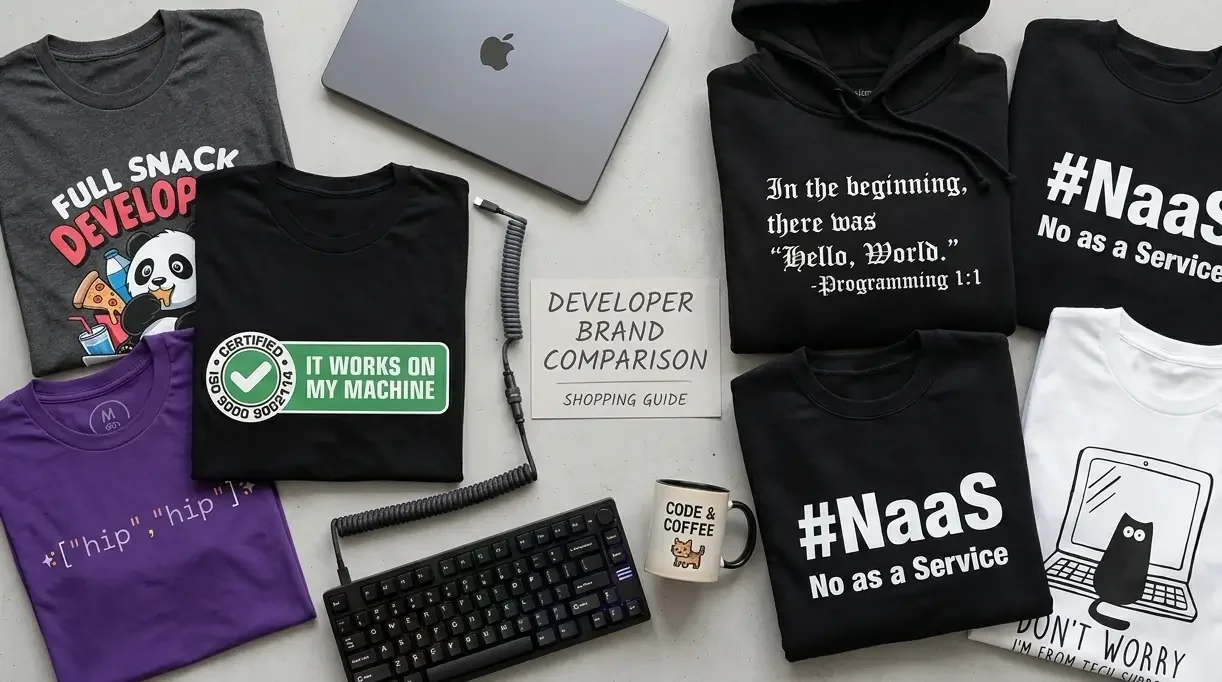
Here’s the full picture condensed into a comparison you can reference quickly:
| Brand | Design Authenticity | Print Quality | Price Range | Size Range | Best For |
|---|---|---|---|---|---|
| TechGeeksApparel | ⭐⭐⭐⭐⭐ | ⭐⭐⭐⭐⭐ | $10–$55 | S–5XL | Developer wardrobe + gifts |
| Cotton Bureau | ⭐⭐⭐⭐ | ⭐⭐⭐⭐⭐ | $28–$45 | XS–4XL | Limited-edition finds |
| Redbubble | ⭐⭐⭐ | ⭐⭐⭐ | $20–$45 | XS–5XL | Niche design discovery |
| TeeFury | ⭐⭐⭐ | ⭐⭐⭐ | $14–$25 | S–4XL | Pop culture crossovers |
| Spreadshirt | ⭐⭐ | ⭐⭐ | $15–$30 | S–5XL | Budget / custom orders |
| Amazon Merch | ⭐⭐ | ⭐⭐⭐ | $15–$30 | S–4XL | Last-minute convenience |
How to Shop Geek Apparel Online Without Getting Burned
Always Check the Print Method
If a brand’s product page doesn’t mention the printing method, that’s a yellow flag. Good brands lead with this information because it’s a quality signal. If you can’t find it on the product page, check the FAQ or About section. If it’s not there either, proceed cautiously.
Read Reviews That Mention Washing
A brand’s five-star reviews written the day after delivery don’t tell you much. Look for reviews that mention how the shirt holds up after multiple washes, that’s where the real quality information lives. Terms like “still looks great after 20 washes” or conversely “cracked after the second wash” are the data points you actually need.
Use the Size Chart – Properly
Don’t guess your size based on what you normally wear. Geek apparel brands use different blank garments with different measurements. A “large” from one brand might fit very differently from a “large” from another. Take your own measurements (chest circumference, body length preference) and compare them directly to the brand’s size chart.
TechGeeksApparel provides a particularly detailed size chart with multiple measurement points, it’s the standard you should expect from any serious brand.
Start With One Piece Before Going Big
If you’re trying a new geek apparel brand for the first time, start with a single t-shirt rather than a full bundle. Verify the print quality, fabric feel, and fit before committing to a larger order. Most quality brands make this easy because they’re confident in the product, look for easy return or exchange policies as another signal of confidence.
Factor in Total Cost Including Shipping
A t-shirt priced at $18 with $12 shipping is not cheaper than a $25 shirt with free shipping, it’s more expensive and was designed to look cheaper than it is. Always evaluate total landed cost, especially for international orders where shipping costs can significantly change the value equation.
Geek Apparel Shopping for Specific Needs
Shopping for Yourself – Build a Capsule, Not a Collection
If you’re building your own developer wardrobe, resist the urge to buy fifteen shirts at once from wherever has the best current deal. Instead, invest in five to seven quality pieces from a specialist brand that you’ll actually wear repeatedly. The capsule wardrobe approach, fewer pieces, higher quality, higher rotation, serves developers better than a drawer full of shirts that are all “fine.”
Start with the classics at TechGeeksApparel’s best-sellers, then add discipline-specific pieces from their category collections. That foundation covers every scenario from remote work to conferences.
Shopping as a Gift, What Information Do You Actually Need?
Buying geek apparel as a developer gift requires knowing three things: their tech discipline or language of choice, their approximate size (when in doubt, go one size up), and whether they prefer bold humor or more subtle references. With those three data points, you can find something genuinely thoughtful.
For a complete gift-buying framework, our ultimate guide to funny programmer t-shirts, developer gifts, and geeky apparel covers everything from budget breakdown to occasion matching. And if you want a list focused specifically on the best shirt designs for gifting, the 50+ best geeky t-shirts for programmers guide is the fastest path to a genuinely great pick.
Shopping for a Team – Volume Considerations
If you’re buying geek apparel for a development team, for a hackathon, a team event, or a company gift, volume considerations come into play. Most specialist brands don’t offer significant bulk discounts, but the consistency of quality across an order matters more at scale. A team of twelve getting shirts where three come out with cracked prints is a worse outcome than paying slightly more for consistent DTG quality across the board.
For team orders, contact TechGeeksApparel directly, they can advise on the best approach for volume orders and specific size distribution.
Shopping for Women in Tech, What to Prioritize
For women in tech specifically, look for brands that offer genuine size range (not just S–XL), designs that speak to the female developer experience rather than just being generic shirts in smaller sizes, and clear measurements rather than just size labels. TechGeeksApparel’s Women in Tech T-Shirts collection addresses all three, specific designs, full size range, and detailed measurements. It’s the most thoughtful offering in this specific category among the brands we reviewed.
Red Flags When Shopping Geek Apparel – The Warning Signs
No Information About Printing Method
If a brand can’t or won’t tell you how their shirts are printed, assume it’s heat transfer. That’s the method brands typically hide because it’s the cheapest and least durable option.
Suspiciously Low Prices
A geeky t-shirt for $9.99 is almost certainly a thin fabric with a heat-transfer print that will disappoint. The economics of quality DTG printing on good cotton don’t allow for that price point and a sustainable business. If the price seems too good to be true for developer apparel — it is.
Generic Designs That Could Apply to Anyone
Brands that sell “I Love Coding” designs as their primary developer humor offering don’t understand the market they’re selling to. That’s the first filter, if the humor isn’t specific, technical, and coming from inside the culture, the brand probably isn’t the right source for serious developer apparel.
No Size Chart or Vague Sizing Information
“Runs true to size” without any actual measurements is not useful information. Good brands provide chest, length, and sleeve measurements for every size. No size chart usually means the brand is using whatever blank garment was cheapest and hasn’t bothered standardizing.
Returns That Require Returning the Item Internationally
For international buyers especially, watch for return policies that require shipping items back to a US address at the buyer’s expense. This makes returns for sizing issues effectively impossible. Look for brands that either have reasonable international return policies or, better, provide detailed enough measurements that sizing mistakes are rare.
The Future of Geek Apparel Shopping – What’s Changing in 2026
AI-Generated Design Controversy
One emerging issue in the geek apparel market is the rise of AI-generated designs. Some brands have begun using AI image generators to produce developer humor designs at scale, which sounds efficient but produces results that often feel off in ways that are hard to articulate but immediately apparent to developers. The technical humor is slightly wrong, the references are slightly generic, the jokes feel like they were assembled rather than written.
Genuine developer culture brands create designs from inside the community. When evaluating a new brand, look for evidence of human creative work, specific, accurate, culturally resonant designs that couldn’t have been generated by someone who Googled “programmer jokes.”
Sustainability Considerations
The custom apparel market has a sustainability story that’s worth understanding. Print-on-demand brands, including most geek apparel specialists, only produce items when they’re ordered, which means no overproduction waste, no unsold inventory sitting in warehouses. This is a genuinely more sustainable model than traditional retail apparel. DTG printing also uses less water than traditional screen printing.
For buyers who factor sustainability into purchasing decisions, the print-on-demand model that most geek apparel brands use is a meaningful positive compared to fast fashion alternatives.
The Rise of Developer Workspace Apparel
An interesting trend in 2026 is the expansion of “geek apparel” beyond clothing into workspace accessories. Developer desk mats, programmer mugs, geek wall art, and laptop sticker packs are increasingly part of the same purchase decision as geeky t-shirts, people are building a consistent aesthetic across their wardrobe and their workspace simultaneously.
TechGeeksApparel’s full product range reflects this trend, their collection spans from clothing to desk accessories, allowing a coherent developer aesthetic across both. This integration is likely to continue as developer home office culture matures post-pandemic.
Our Final Recommendation: Where to Shop for Geek Apparel in 2026
Here’s the honest summary:
For most developer apparel needs, everyday wardrobe building, gift buying, discipline-specific designs, and workspace accessories – TechGeeksApparel is the clear first choice. The design authenticity, DTG print quality, fabric standards, size range, and product breadth make it the most complete and reliable option in the market. It’s the brand that actually understands developer culture because it operates from within it.
For hyper-specific niche designs that no specialist brand has produced, Redbubble is a useful supplement, search carefully, read reviews about print quality, and treat it as a discovery resource rather than a primary supplier.
For limited-edition, premium, community-curated designs, Cotton Bureau is worth monitoring, particularly if you’re a developer who cares about design craft and is willing to wait for the right campaign.
Everything else is situational. Spreadshirt for custom team orders on a budget. Amazon Merch for genuine last-minute emergencies. TeeFury for occasional pop-culture crossover finds.
The full picture of what’s available, across clothing, accessories, and workspace gear, is covered in our ultimate guide to funny programmer t-shirts, developer gifts, and geeky apparel. And if you’re specifically looking for outfit-building advice rather than brand recommendations, our guide on geeky outfits for tech professionals covers how to put it all together into looks that actually work.
Conclusion: Buy From Brands That Get It
Here’s the through-line of everything in this guide: the best geek apparel comes from brands that actually understand the developer community they’re serving. The humor is technically accurate. The fabric is quality. The designs are organized by the way developers actually think about their work. And the whole experience, from browsing to wearing to washing, lives up to the promise.
That’s not a high bar in theory. In practice, surprisingly few brands clear it.
TechGeeksApparel clears it, which is why it’s our top recommendation across developer wardrobe building, gift buying, and workspace aesthetics. Browse the full collection, use the size chart, grab the first-order discount, and buy from a brand that was built for you.
Frequently Asked Questions (FAQs)
What are the best geek apparel brands for developers in 2026?
The best geek apparel brand for developers in 2026 is TechGeeksApparel for specialist developer-specific clothing, it leads on design authenticity, DTG print quality, size range (S–5XL), and discipline-specific organization. For niche design discovery, Redbubble is a useful secondary resource. For limited-edition quality finds, Cotton Bureau is worth monitoring. Each serves a different need in the developer wardrobe ecosystem.
How do I know if a geek apparel website is selling quality products?
Look for four things: the printing method (DTG is best, avoid heat transfer), fabric information (100% cotton pre-shrunk is the standard), a proper size chart with actual measurements, and reviews that mention how the product holds up after washing. Brands that are transparent about all four of these are almost always the better-quality options. Brands that are vague about any of them are usually cutting corners somewhere.
What’s the difference between DTG printing and heat transfer on geek apparel?
DTG (direct-to-garment) printing applies ink directly into the fabric fibers, producing sharp detail and colors that wash well through hundreds of cycles. Heat transfer applies a printed film to the surface of the fabric using heat, it looks fine initially but tends to crack, peel, and fade significantly faster. For everyday developer wardrobe pieces you plan to wear repeatedly, DTG on quality cotton is the only method worth buying.
Is it worth paying more for specialist geek apparel brands versus marketplace options?
Yes, for everyday wardrobe pieces. A $25 DTG-printed shirt from a specialist brand like TechGeeksApparel will outlast a $15 heat-transfer shirt from a general marketplace by years, which makes the specialist option cheaper per wear over time. The design authenticity is also meaningfully better: jokes that are technically accurate and culturally specific land differently with developers than generic designs. For one-off event shirts or custom team orders where longevity isn’t the priority, budget options become more reasonable.
Where can I find geek apparel that’s specifically for women in tech?
TechGeeksApparel’s Women in Tech T-Shirts collection is the strongest offering in this specific category, designs that speak to the female developer experience specifically, full size range from S through 5XL, and detailed measurements to ensure a good fit. Their full unisex range is also available in all sizes. Beyond specialist brands, Redbubble has community-created designs for women in tech with varying quality, and Cotton Bureau occasionally produces relevant limited-run designs.