
Long-Term Programming Career
The tech industry is obsessed with youth. We celebrate the 19-year-old startup founder and the whiz kid who learns Rust in a weekend. This creates a silent, nagging fear for many: “What happens to me when I’m 40? 50? Does my brain stop working? Do I get replaced by an AI or a cheaper graduate?”
The reality is far more interesting, and far more hopeful. A long-term programming career isn’t a slow decline; it’s an evolution. The way you code at year 20 is fundamentally different from the way you coded at year two.
If you’re wondering about software developer longevity, let’s pull back the curtain on what the decades actually look like for those of us who stay in the trenches.
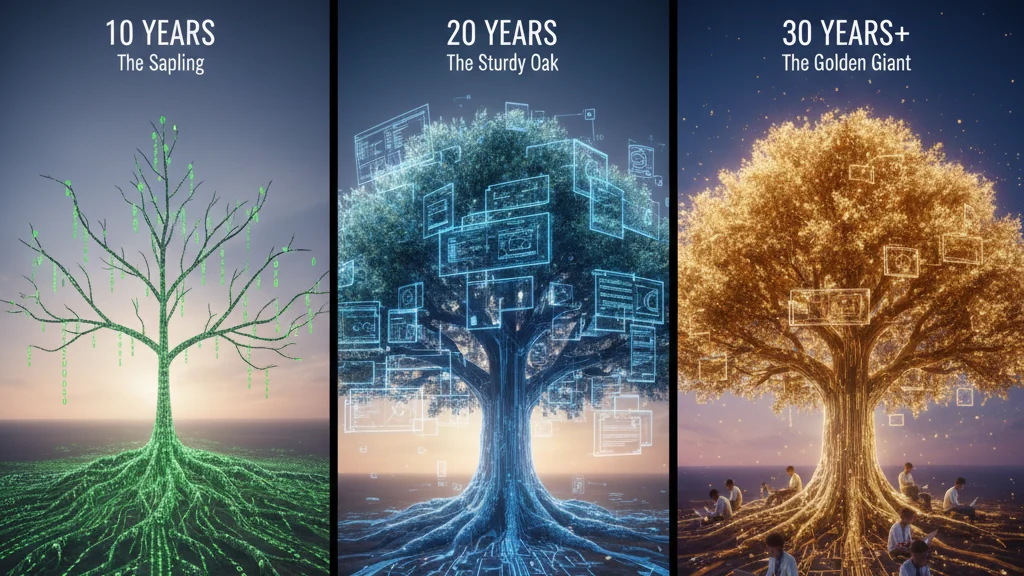
Phase 1: The First Decade (The Accumulation)
In your first 10 years, you are a sponge. You’re obsessed with frameworks, syntax, and “the new thing.” You likely pride yourself on your speed and your ability to pull an all-nighter to ship a feature.
However, this is also the highest risk period for hitting a wall. Many people ask, do programmers burn out with age? Actually, the most intense burnout often happens here, when developers haven’t yet learned how to balance their cognitive load with their personal life.
Phase 2: The Second Decade (The Simplification)
By year 20, something strange happens. You stop caring about using the coolest library and start caring about reliability. You’ve seen enough revolutionary tech stacks die to know that boring code is often the best code.
You start to realize why older developers write simpler code. It’s not because they’ve forgotten the complex stuff; it’s because they’ve lived through the nightmare of maintaining it. At this stage, your value shifts from typing to thinking.
Phase 3: The Third Decade (The Architecture of Wisdom)
After 30 years, you are essentially a software historian and architect. You can spot a bug in a system design before a single line of code is even written. You understand that software is 10% technology and 90% sociology.
At this level, you see why experience beats speed in programming. A junior might write 500 lines of code in an hour; a 30-year veteran might spend that hour deleting 500 lines of unnecessary code.
A Badge of Honor for the OGs: You don’t get to the “Architecture of Wisdom” phase without developing an iron-clad sense of patience, the kind of patience that was forged in the fires of 56k modems and busy signals. If you remember what the internet sounded like before it was instant, you’ve earned the right to wear the struggle. Grab our Funny Dial-Up Internet Shirt – Retro Tech Nostalgia Tee and remind the juniors that you learned patience the hard way.
The Cross-Roads: Staying or Leaving?
Not everyone stays in a pure “IC” (Individual Contributor) role. In fact, why some developers leave coding often has less to do with losing skill and more to do with finding new ways to solve problems, such as management or teaching.
Interestingly, we are seeing a massive surge in Second Act developers. You might wonder, why do career switchers succeed in tech so late in life? It’s because their previous life experience gives them a context that lifelong coders sometimes lack.
How to Build a Sustainable Career
If you want to stay in this game for the long haul, you have to change your relationship with the machine.
- Stop Chasing Hype: Master the fundamentals (data structures, communication, systems design). They don’t change.
- Protect Your Health: Your back and your eyes are your most important hardware.
- Embrace the Hard Part: Realize that programming is harder to start, but easier to sustain once you develop pattern matching for bugs.
The TechGeeks Directive
The aging programmer isn’t a myth; they are the backbone of every stable system you use today. Age in programming doesn’t mean being outdated, it means being vetted.
Are you worried about your future in tech?
- Find out if programmer burnout is an inevitability or an avoidable trap.
- Or, learn why experience is the ultimate cheat code for productivity.
Frequently Asked Questions (FAQ)
What does a software developer career look like after 20 or 30 years?
A long-term programming career is an evolution from writing code to solving systems. After 20 years, developers typically shift toward simplification, favoring reliable, boring tech over hype. By year 30, the role often becomes one of Software Architecture and Wisdom, where the focus is on preventing bugs through better design and mentoring rather than just raw typing speed.
Do programmers burn out as they get older?
While many fear that software developer longevity decreases with age, peak burnout actually occurs in the first decade. This is usually due to high cognitive load and a lack of work-life boundaries. Older developers often have higher job satisfaction because they have developed “pattern matching” skills that make solving complex problems less mentally taxing.
Why do older developers write simpler code than juniors?
Older developers write simpler code because they have lived through the archaeology of maintaining over-engineered systems. They prioritize reliability and maintainability over cleverness. This is a key reason why experience beats speed; a veteran knows that the most expensive part of software is the long-term maintenance, not the initial build.
Can you stay an Individual Contributor (IC) for an entire tech career?
Yes. While many transition into management, the Staff Engineer or Principal Architect tracks allow for lifelong coding careers. These roles are highly valued because a 30-year veteran can often spot architectural flaws in minutes that would take a junior team weeks to discover during production bug crises.
Why do career switchers succeed in tech later in life?
Career switchers succeed because they bring sociological context to technical problems. Since software is ultimately built for humans, having a background in other industries allows them to bridge the gap between business needs and code more effectively than those who have only ever known the developer bubble.
How can I ensure my programming skills stay relevant as I age?
To maintain software developer longevity, focus on mastering foundational fundamentals like data structures, system design, and communication. Unlike frameworks, these principles do not change. Additionally, protecting your physical hardware, eyes, back, and hands, is essential for a sustainable 30-year career.
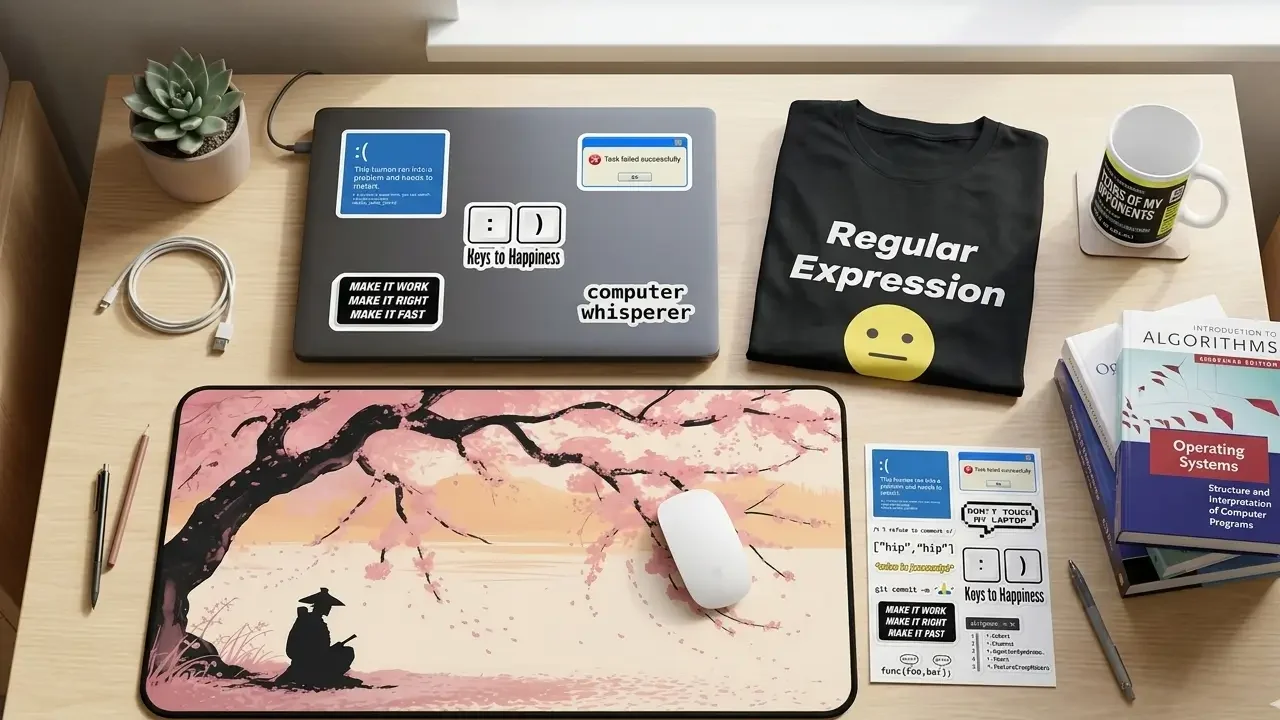

![A clean flat lay of nerdy gift ideas under $50, featuring a "World's [0] Programmer" t-shirt, a "I Learned Patience the Hard Way" mug, mechanical keyboard keycaps, and tech-themed books](https://techgeeksapparel.com/wp-content/uploads/2026/06/nerdy-gift-ideas-under-50-programmer-essentials.webp)